Every writer wants to better their craft, to constantly improve upon their work. But your own words can only get you so far. And when your words fall short, it feels natural—and in fact, necessary—to turn to the words of others. Nobody writes in a vacuum, and thank goodness for it, because according to so many acclaimed authors, reading is the answer to becoming a better writer. So fear not when writer’s block hits you like a brick. No writer swims alone in the sea of words, for books exist! And what a pleasure it is that a writer, a lover of words, can turn to books for saving. Here are a few quotes from literary giants about being a reading writer.
“If you want to be a writer, you must do two things above all others: read a lot and write a lot. There’s no way around these two things that I’m aware of, no shortcut.”
—Stephen King
King’s advice is simple but profound: reading fuels writing the way oxygen fuels fire. You can study plot diagrams and syntax charts, but the most intuitive education a writer receives comes through immersion, through falling headfirst into someone else’s story and surfacing with a deeper sense of your own.
“Read a thousand books and your words will flow like a river.”
—Virginia Woolf
What’s beautiful about this idea is that it doesn’t romanticize talent; it democratizes it. The ability to write well isn’t bestowed. It’s built. The more we read, the more natural our writing becomes, not because we copy what we’ve read, but because we internalize how language works when writing is done well. We learn cadence, subtlety, pacing, and perspective. We learn what moves us, and, by extension, what might move someone else.
“It is my contention that the process of reading is part of the process of writing, the necessary completion without which writing can hardly be said to exist.”
—Margaret Atwood
Reading isn’t just preparation for writing; it’s an act of writing itself. It’s a dialogue across time and genre. When we read, we’re finishing what another writer started. Then, when we write, we continue that conversation.
“Read, read, read. Read everything—trash, classics, good and bad, and see how they do it. Just like a carpenter who works as an apprentice and studies the master. Read! You’ll absorb it. Then write. If it is good, you’ll find out. If it’s not, throw it out the window.”
—William Faulkner
Faulkner’s point is freeing. There’s no single correct way to become a great writer. You don’t need to curate a perfect reading list. Read what excites you, what confuses you, what makes you feel something. Every kind of writing teaches something different: the structure of a mystery novel, the emotional precision of a poem, the raw immediacy of a blog post.
Reading is an apprenticeship for a writer, a chance to return to your own blank page, carrying with you echoes of all the stories you’ve loved. When your own voice feels quiet, turn to the language of another. It rekindles awe and reminds you what it truly means to be a writer: to be in constant conversation with those who share the ambition of making meaning and creating beauty with the written word.
By Hannah Larson, Inscape Staff
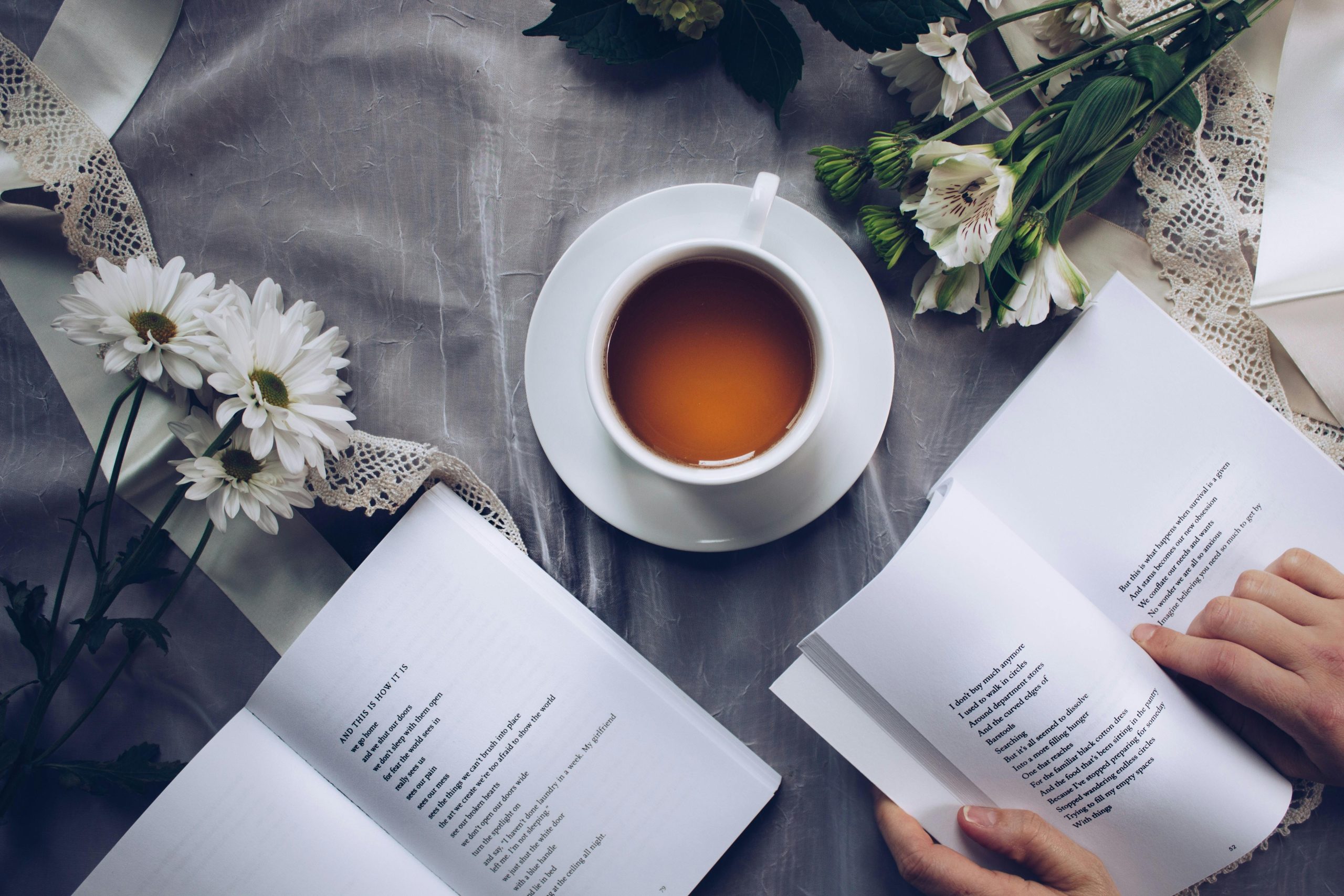
Picture heading from Thought Catalogue, pexels.com