

Inscape: inward significant character or quality belonging uniquely to objects or events in nature and human experience esp. as perceived by the blended observation and introspection of the poet and in turn embodied in patterns of such specif. poetic elements as imagery, rhythm, rhyme, assonance, sound symbolism and allusion:
INWARDNESS
WEBSTER’S THIRD NEW INTERNATIONAL DICTIONARY
Somewhere along the world’s timeline we learned to make mirrors. Probably after man invented the wheel and found that he and she could now go calling on others of their kind, he and she began to worry about personal appearance. After all, wheels increase speed, and the speed increases wind, and the wind musses one’s hair. We have windows now, but in those days, everything was no doubt very open and windy. Sometime after the wheel then, the mirror had to be invented. This began to disrupt the family unit. Instead of asking a family member how proper he or she looked and waiting for an approving or disapproving grunt (sometimes it is still done this way), an adolescent spent an hour combing out fur and straightening tangles in some places, while carefully displacing hairs in other places, and all this for the Byronic, or California look of calculated casualness. Primping before mirrors became a great national pastime. It is even more so today. Entire buildings have been converted into cubic mirrors. And we, having grown so accustomed to receiving impressions of ourselves, expect and even panic when we can’t find a mirror anywhere. We have even begun to look into eyes the eyes of almost anyone-in order to maintain our image as a mirror gives it to us. If we cannot see ourselves, I believe that we fear we are not there.
Our mania for feedback created a demand for a mass mirror market. For instance, a lot of Sunday insert-type of magazines bring to you such questions as, “Are you lonely? Take this quiz and find out!” and “Does your eye color dictate your personality?” People sell us things on the pitch that “This is really you!” or “Change your image!” We amass personal belongings in order to identify or make a statement about ourselves: owning things-property, animals, machines-becomes an act of self-expression. Mirrors shine everywhere around us.
As the mirror revolution approached our century, a poet named Gerard Manley Hopkins wrote to Robert Bridges, his editor, in February of 1879 and said in regard to his work,
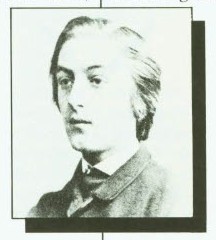
“. . . But as air, melody, is what strikes me most of ail in music and design in painting, so design, pattern or what I am in the habit of calling ‘inscape’ is what I above all aim at in poetry.” Gerard Manley Hopkins, like other writers and thinkers that have come and gone, learned that to treat the gift of vision as perception through a window rather than by means of a mirror clarified understanding that could again be reconstructed in his art. This particular kind of restructuring was his perception of the thing-the discovery of it as perceived by his combined senses and emotional and intellectual comprehension-in a sense another mirror, true; but this kind of mirror is not nearly so flaunting or possessive. This kind of understanding does not project upon a flower the intangible human sigh or expect that the only function of the soul of a dog is to be man’s best friend: the flower has something that makes it different from us and bestows and emotes its flowerness, and the dog has something that makes it bark, gesture, respond, and instigate like a dog. It has inscape, and the inscape of any given person, animal, or object is different from man’s or any individual’s inscape.
Experience itself has inscape, as well as horses, rocks, and apples. Recorded experience, or writing, has its inscape, too. Inscape is contained in all the technical constructions of written or visual or performed work. Thus one may glimpse the “inwardness” of a work by perceiving how rhyme, rhythm, meter, images and so forth work together to compose the whole. We look beyond ourselves into the writing, the experience, and perhaps the person, thereby avoiding what Eliot astutely defined as “having the experience but missing the meaning,” becoming, as Henry James put it, “A person upon whom nothing is lost.”
We have borrowed Hopkin’s term inscape to describe what we hope will be the journal’s justification for existence. Inscape is to be a glass through which the creative element on the Brigham Young University campus manifests itself. We leave it up to our readers to
perceive the inscape of the materials collected, of the campus itself, and beyond.
We welcome participation, submissions, and support. We publish the best of what we get, and we need a greater breadth of work to give a fair representation of the creative and scholastic activities on
campus.
We hope you enjoy the magazine.
Patricia E. Gunter
Editor
Inscape